

NOTICINGS: It’s been done before
For thousands of years
What is it?
A dream?
Not a dream, but thoughts?
A fragment?
Or something else entirely—like a detached AI celluloid mask lying across my eyes, disturbing my mind?
That was last night while sleeping. Or very early this morning.
Is it true? Is it not true?
Whatever it was, it’s gone now. A puff of dream, or the not-dream of fragments spiraling.
So I thought, yes—last night I had been scrolling YouTube for far too long. Like a bag of potato chips, the more I ate, the more starving for something real I was. I believed what I saw and heard.
But I had been careful about the breathless breaking news. I checked the date. I checked the time posted. The reporter? A familiar, trusted, known columnist: George Will.
The government had taken control, he said.
Trump had lost control of his property.
Before going to bed, I fact-checked.
Mar-a-Lago had not been seized.
There was no confirmed court order removing Trump’s control of his property.
My hope had aligned with the fake story. The magnetic pull between believing and disbelieving what I wanted to be true held fast. That was the dangerous part, and it barged into my dream and the roiling thoughts.
What frightened me was this: even after I knew it was fake, some part of me didn’t want to let go of believing it.
I wanted it to be true.
The pull to believe what I know is crap is magnetic.
Quagmire. That’s the state I woke in.
Now, the waking me sits in deliberate silence. My dog Teddy leans his hip into my shoulder—a steady, warm, dependable presence.
I am witnessing the erosion of perceptual trust under conditions of information overload, fatigue, and emotional intensity.
Instead of opening outward, that magnetic pull—toward what I want instead of what is—collides with the state of my own attention.
I am addled. I am as shaken as Teddy was when he dashed onto what he expected to be Lake Padden, his place to swim, only to find himself on a splashless frozen surface. He skidded.
For months afterward, he would not leave the rug to cross to his dinner bowl. I was astonished. This is one food-motivated animal. Eventually, I realized what had happened: the tile floor was the same color as the ice. To him, it was danger. His sense of being endangered lasted a very long time.
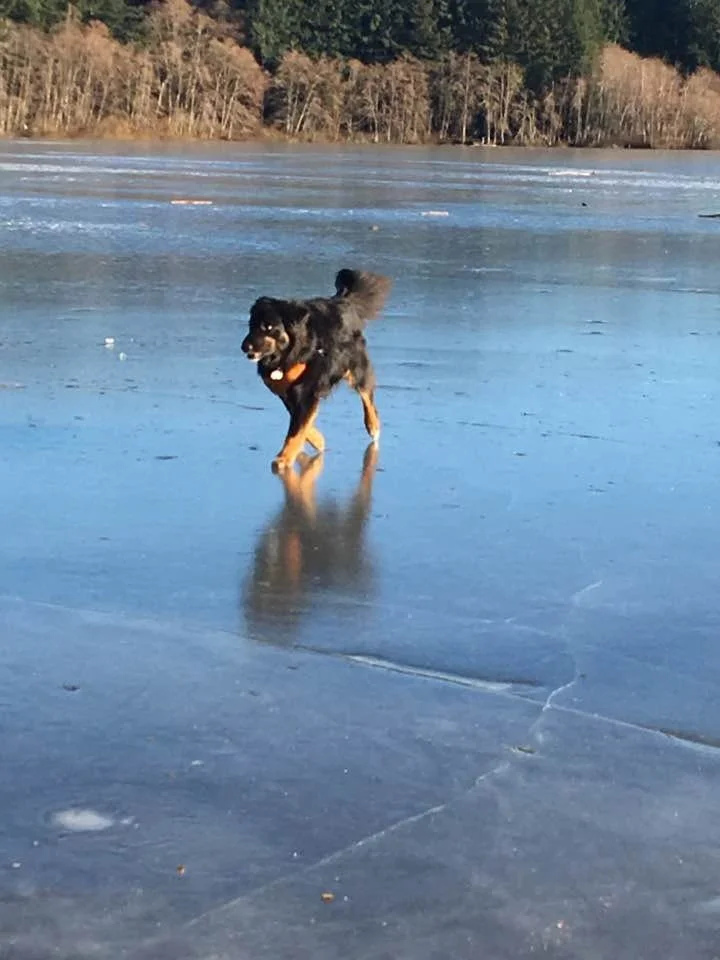
Not the ice. The memory of it.Heather Cox Richardson often urges us to say not only what we oppose, but what we want—not slogans, but lived realities. What future do we want for the nation? That is the question.
What do I want for the future?
What will we together build, as Leonard Cohen sang, for the children who are asking to be born?
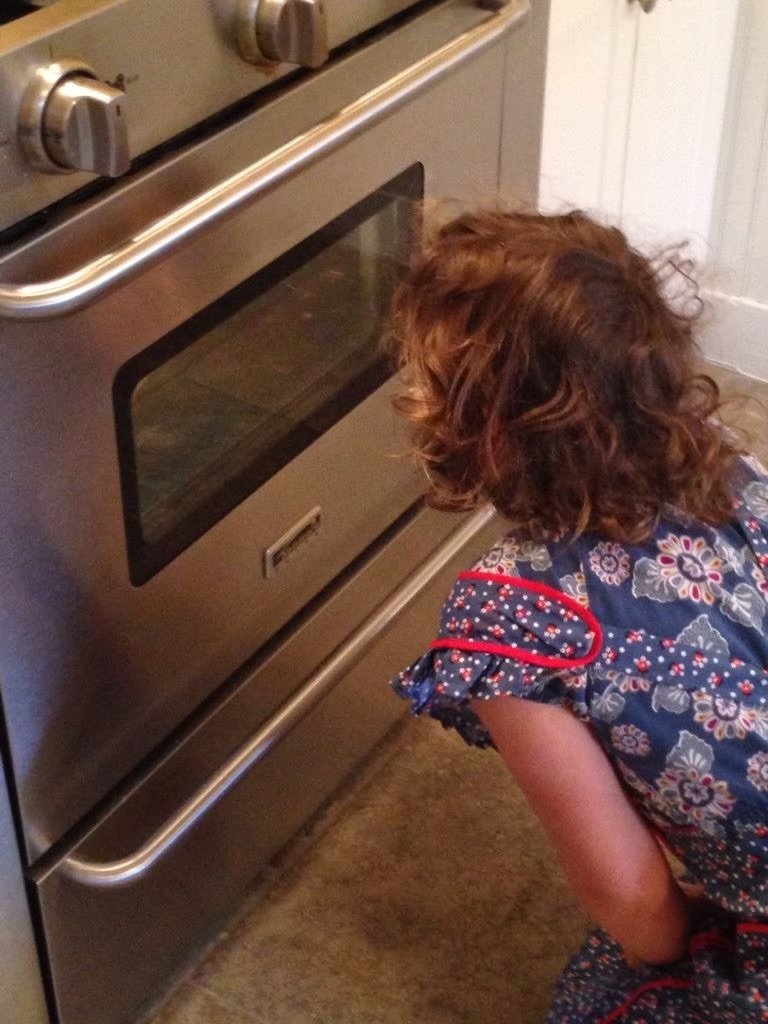
Waiting without proof.Our good fortune is the inheritance of our long human history.
For tens of thousands of years, humans have:
built cities without kings
experimented with hierarchy and then abandoned it
lived with complexity without bureaucracy
shifted between egalitarian and structured systems seasonally
deliberately refused centralized power
For long stretches of human history, societies treated political forms the way we treat tools:
useful in some seasons,
dangerous in others,
never sacred.
David Graeber and David Wengrow document these histories in The Dawn of Everything.
Timothy Snyder describes a long tradition of civic resilience in Ukraine. Kyiv emerged as a major civic center in the late ninth century.
These societies did not survive because they mastered control.
They survived because they cultivated capacities:
attention
patience
collective imagination
the ability to stay with what was unfinished
They learned how to wait together.
How not to force what was not ready.
And throughout it all, play was afoot, across days, seasons, and generations. Play, an unexpected gift, was our capacity for social experimentation—to us so accustomed to transaction, it was the chance to try a way of being that hadn’t been done before.
What steadies me is remembering that human beings have lived with certainty and complexity together, and survived by learning to pay attention, wait, and play.
I do not mean to inspire with the concept of progress.
I mean to offer awe—
at human possibility across deep time.
This is not an argument for returning.
There is no return.
The present is not the measure of the possible.
The impossible becoming possible often sings its way into view.
When Mozart’s clarinet begins to soar—both utterly itself and utterly integrated into the whole—I feel my interior reassemble. The sound does not argue. It organizes. It breathes. It holds complexity without fragmentation.
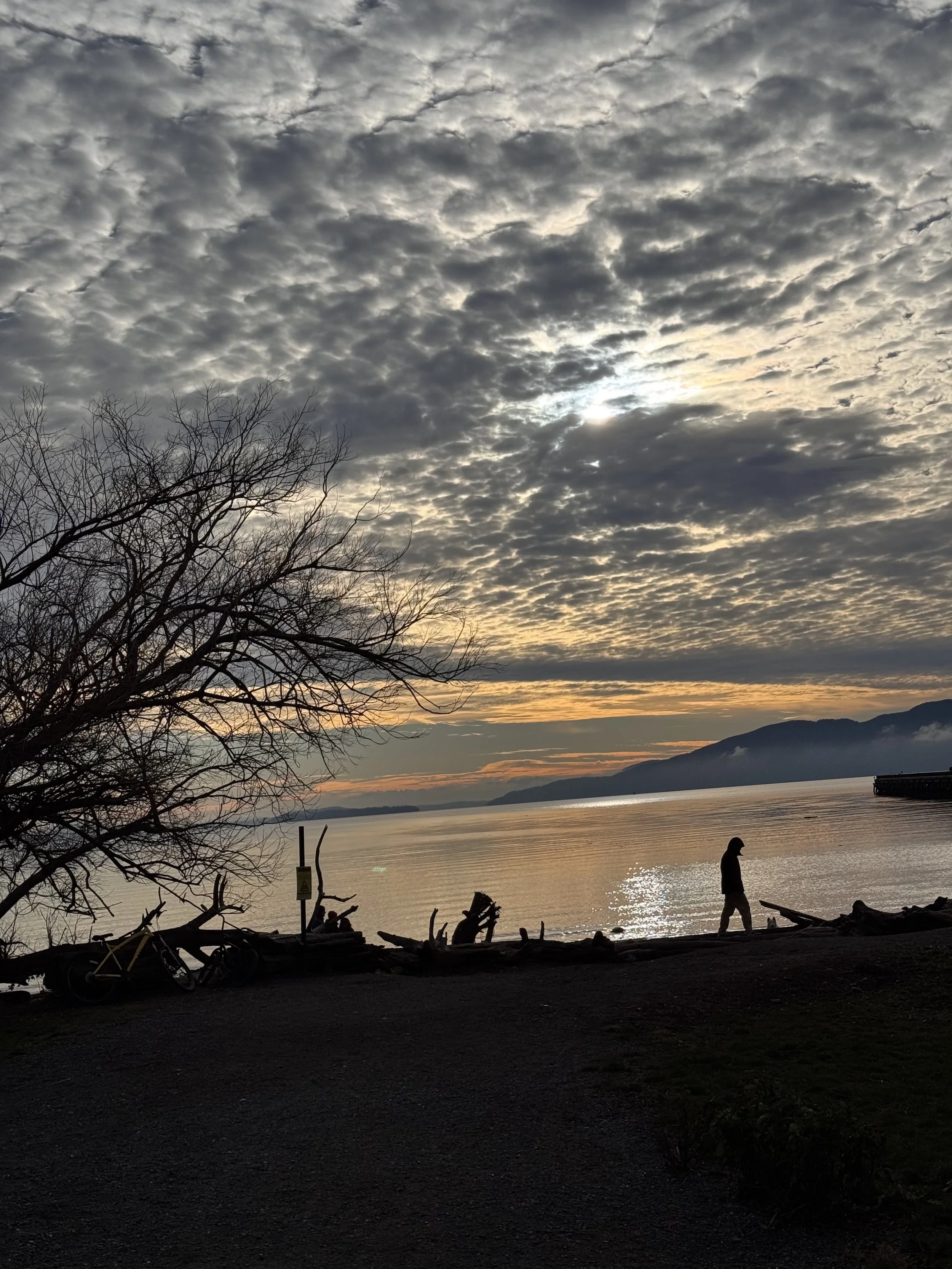
Under spacious skies.In that instant, I am open again.
Open to possibilities as various and unmanageable as the sky itself.
And somewhere just offstage, Folly clears her throat and says what she always says, without apology:
Certainty isn’t the problem.
Pretending it never has to change is.
Notes
Leonard Cohen, Dance Me to the End of Love (Live in London, 2008)
David Graeber and David Wengrow, The Dawn of Everything (2021)
Mozart, Clarinet Quintet in A major, K. 581