

Welcome Citizens!
This is a cake someone made.
Not perfect. A little lopsided. Candles stuck in wherever they fit.
People were there. Someone lit the candles. Someone else probably worried they’d drip.
Someone laughed. Someone made a wish they didn’t say out loud.
This is what we mean by democracy.
Not a statement. Not a slogan.
A practice that happens when people stay at the table — especially when things feel uncertain, awkward, or unfinished.
You don’t need the right words to begin.
You don’t need to agree.
You don’t need to be calm, persuasive, or correct.
You just need to stay human with one another.
A conversation can start with a question, a story, a worry, or a pause.
It can start badly and still be worth continuing.
A cup of sugar, between neighbors, is not a metaphor for sweetness.
It’s a way of saying: we’re still here, and we’re still talking.

A premise beneath this work
Freedom is the core human capacity — not progress, not survival.
Anthropologist David Graeber and archaeologist David Wengrow, authors of
The Dawn of Everything: A New History of Humanity, describe three freedoms humans have historically practiced:
— the freedom to move away
— the freedom to disobey
— the freedom to reshape social relations
For most of human history, people were not shaped only by systems.
They actively shaped and unshaped them.
This is not romanticism.
It is documented history.
And it unsettles the idea that nothing can change.
Which is another way of saying:
The capacities we need are not gone.
They are waiting for use.

The way to get people comfortable is to talk in person, one to one.
That matters more than anything.
—Heather Cox Richardson
How to Start a Conversation
What do you think about _______?
I’m really concerned about _______ because of _______. How about you?
I know you care about _______. I do too - which is why I’m worried when I see _______ happening.
Have you heard about _______? It’s really concerning to me. What do you think?
I just learned about _______, and it’s freaking me out! What do you think about it?
Formula
Ask a question/start the conversation.
Listen to understand the concern vs react.
Acknowledge the other person’s feelings.
Find common ground (We agree that all kids should feel welcomed at school…)
Move to a “that’s why,” statement. (That’s why I can’t support policies that exclude LGBTQ+ kids from…)
Share your values - shift the conversation to your terms (make it personal).
-
Issues, candidates, voting information.
-
It's easier for people to find common ground on issues than parties or specific candidates.
People will make decisions on voting and candidates they support based on issues.
Issues can be tied to values - which is more powerful for persuasion than facts.
-
Persuadable and unengaged likeminded
Frustrated with politics or may see both sides as same
Considering skipping some races
Regular voters who may join you in this effort
-
Ask about/bring up issues
Talk about voting this year
Use Rally to find information to share and start convos
-
Avoid using R and D labels
Focus on local/state elections - less polarizing
Not a one-and-done conversation - keep having the convo
Lead with empathy and LISTEN
I get it, I hear you
I totally get where you are coming from
If this were true, I would be just as concerned as you
I share some of the same concerns
Do not use, "but." Instead use, "that's why..."
Know when to walk away.
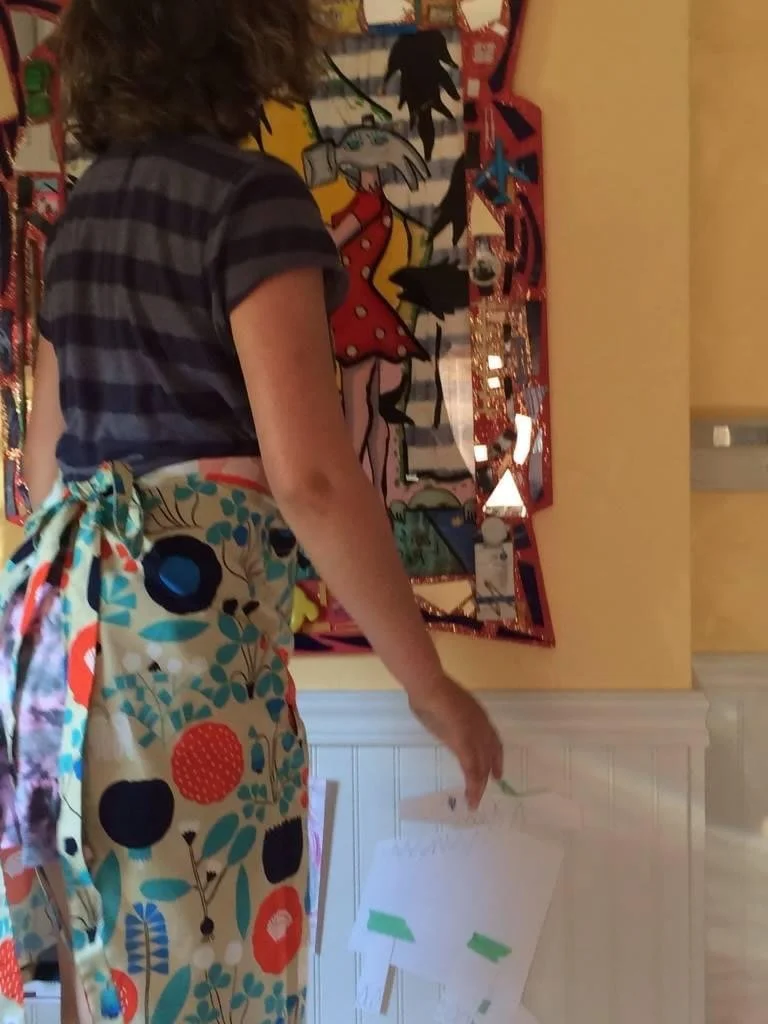
Attention changes what’s possible.
This is where noticing begins.