
NOTICINGS: Before The Vote
Before the vote there is a quieter task.
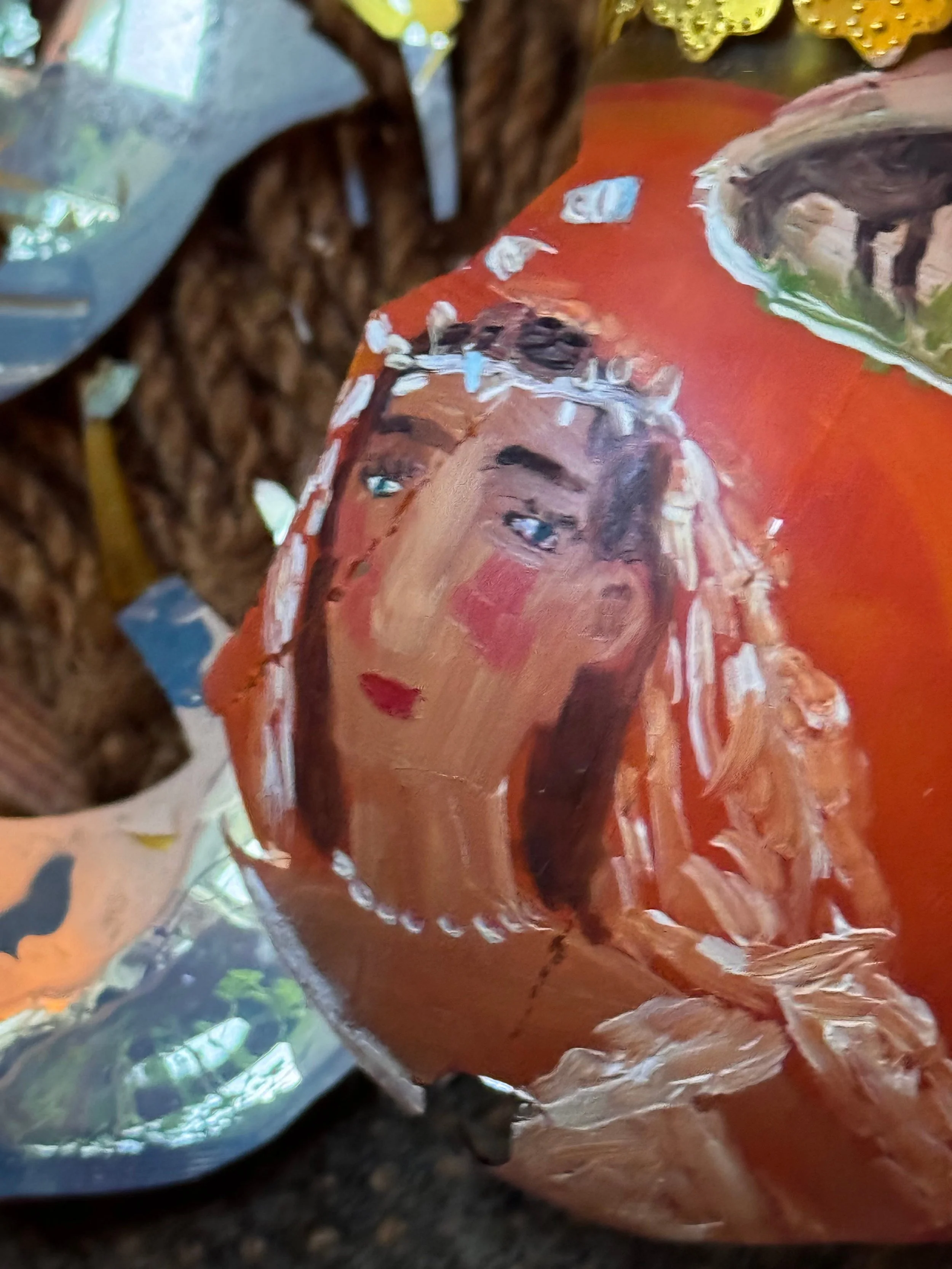
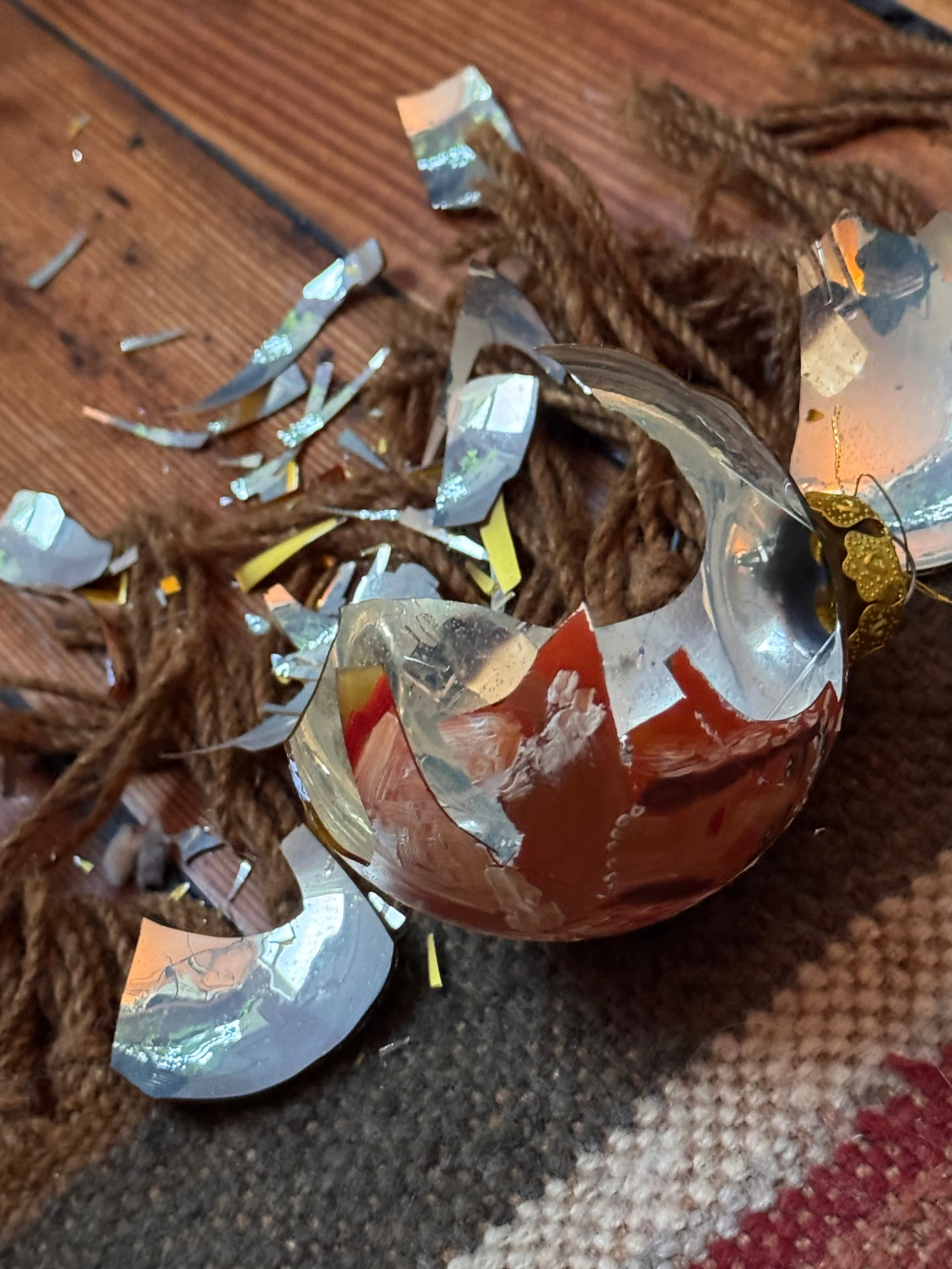
Ann Chamberlin, painting on Christmas ornament, 1998What Lewis Hyde calls reconciliation follows a sequence. Democracy does too.
It is not persuasion.
It is not enthusiasm.
It is not hope.
It is remembering—slowly, in detail—what has already happened.
The shatterings that were accidental.
The shatterings that were deliberate.
The ones we stepped around.
The ones we cleaned up.
The ones we pretended not to see.
In A Primer for Forgetting: Getting Past the Past, Lewis Hyde writes that reconciliation and forgiveness are not moral moods drenched in amnesia, but a series of steps taken in order—without skipping, without laundering the record.
Before the vote, each of these has to be felt.
Not all at once.
One at a time.
This is not confession.
It is not therapy.
It is not healing.
It is the civic work of telling the truth without rushing it toward meaning.
Tell it fully.
Hear it all—even while flinching.
From all sides.
Let it change what comes next.
Only then does the vote count as something other than a wish.
Voting, in this frame, is not an expression of preference or optimism.
It is the last step in a long civic ritual.
Because votes cast without memory are gestures.
And gestures don’t hold.
Folly: You don’t get to skip this part.
Everything depends on it.
Before the vote, stay.
Author’s note:
This piece was written as a civic meditation rather than an argument. It draws in part on Lewis Hyde’s writing on reconciliation and memory, and on the belief that democratic action requires a sequence that cannot be rushed. The image accompanying the text is a shattered, hand-painted Christmas ornament by artist Ann Chamberlin. Several readers told me they only really saw this image at the end. That, too, feels like part of the argument.