

NOTICINGS: Architecture
Florence, thresholds, and what holds life open
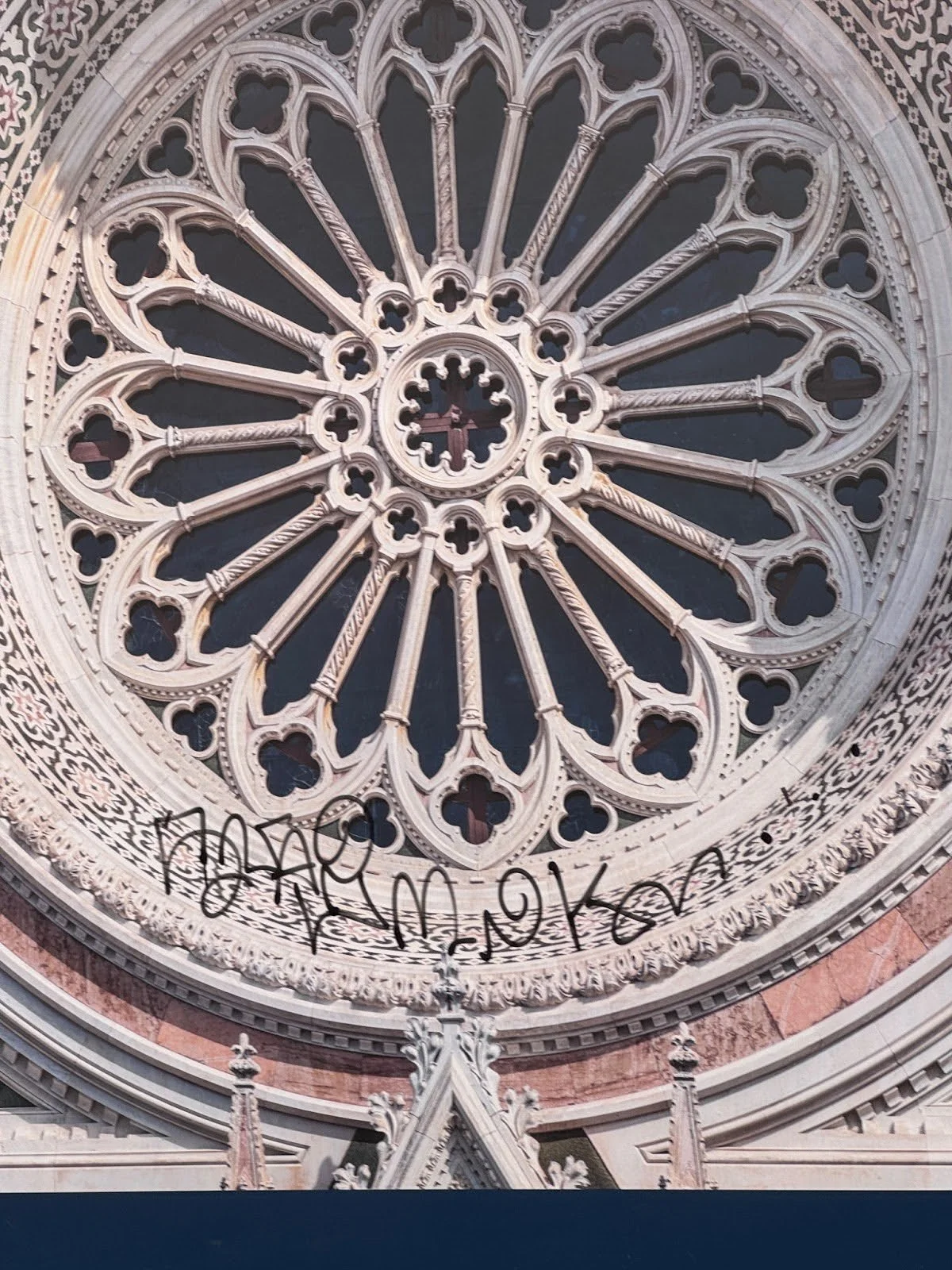
Graffiti on protective covering during restoration of the Cattedrale di Santa Maria del Fiore. Photo by author.I am in Florence, Italy, for 90 days. As I draw curved lines, straight lines, lines angled, circles, and diamonds cut in half, too, the remembered form of the Duomo emerges. At least to my eye. Grace and monumentality. Next, I recall the shapes of contemporary housing in an intensely populated neighborhood where I waited for a bus yesterday. Pinched. Uninviting. Why would a people who glorify their Renaissance past build structures that cause bodies to shrink?
I am not asking what’s cheap to build and what isn’t. I look for structures designed for dwelling, and for elation. Their absence presses, like these houses. I want to understand this abdication into indifference—how it embeds impoverishment into others’ lives. Is it really only means—or their lack—that determines the making of beauty?
Across the street is a house constructed of materials so cheap that the grout between the tiles fails as soon as it dries. Beside it are little houses, pressed into a row. They are two rooms stacked, one on top of the other. They are built to the edge of a high-traffic road of tiny cars and buses that, when riding inside them, feel as wide as the narrow curving road itself. Will the oncoming car tip us off the mountain? The car stops. The bus moves onward. The walkway against the houses demands caution with every step. Inside the houses, delicate curtains cover small windows. Their thresholds are barely a whisper. A splinter marking inside from the outside. Against each door, wind-blown detritus gathers. One threshold has received attention. Plants thrive in found containers. Someone has planted them. Their arrangement sings grace.
Jane Jacobs wrote of placing a chair, tending a plant, and making a place to linger, as life returning from within—what she called ‘unslumming.’ Care at the edges alters how a place feels, and how people meet within it. The planted threshold is not decoration. It is resistance.
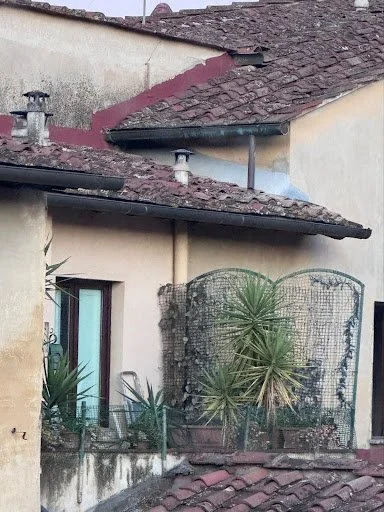
Photo by Author.I live a vast distance from refugee camps. I see no trees, no soil, no water for raised vegetable beds. I do not see brushes, paint, crayons, or paper.
Lodged like an annoying disturbance caught between one’s teeth is a headline: institutional investors’ next grab is the home rental market. This knife’s edge is unsustainable. The word sustainable entered common use to describe a fresh moral stance. Its initial purpose was to protect and to encourage one’s heart, or one’s land, or even the great oceans upon which so much living depends. But insiders, fast to pocket capital, swept in, converting protection into gain. The knife’s edge draws blood. To welcome in and to shut out.
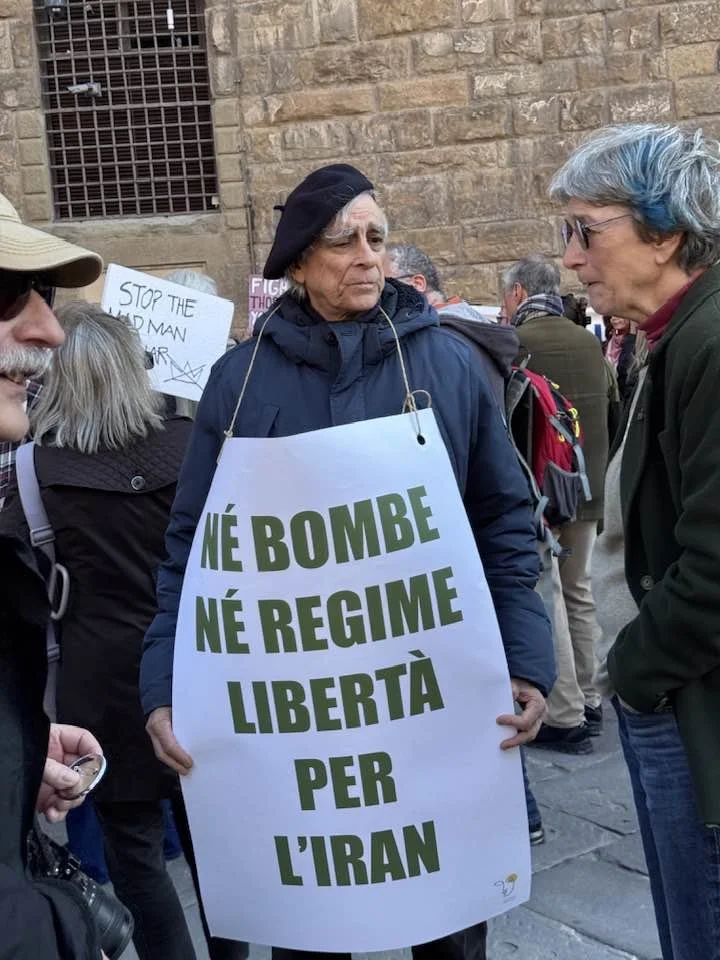
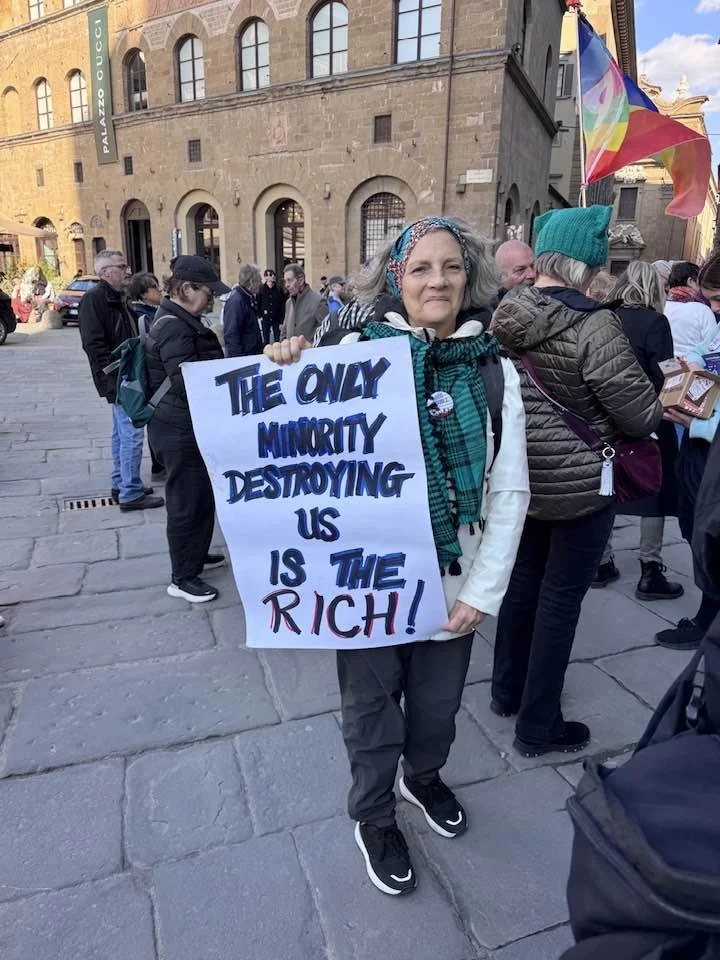
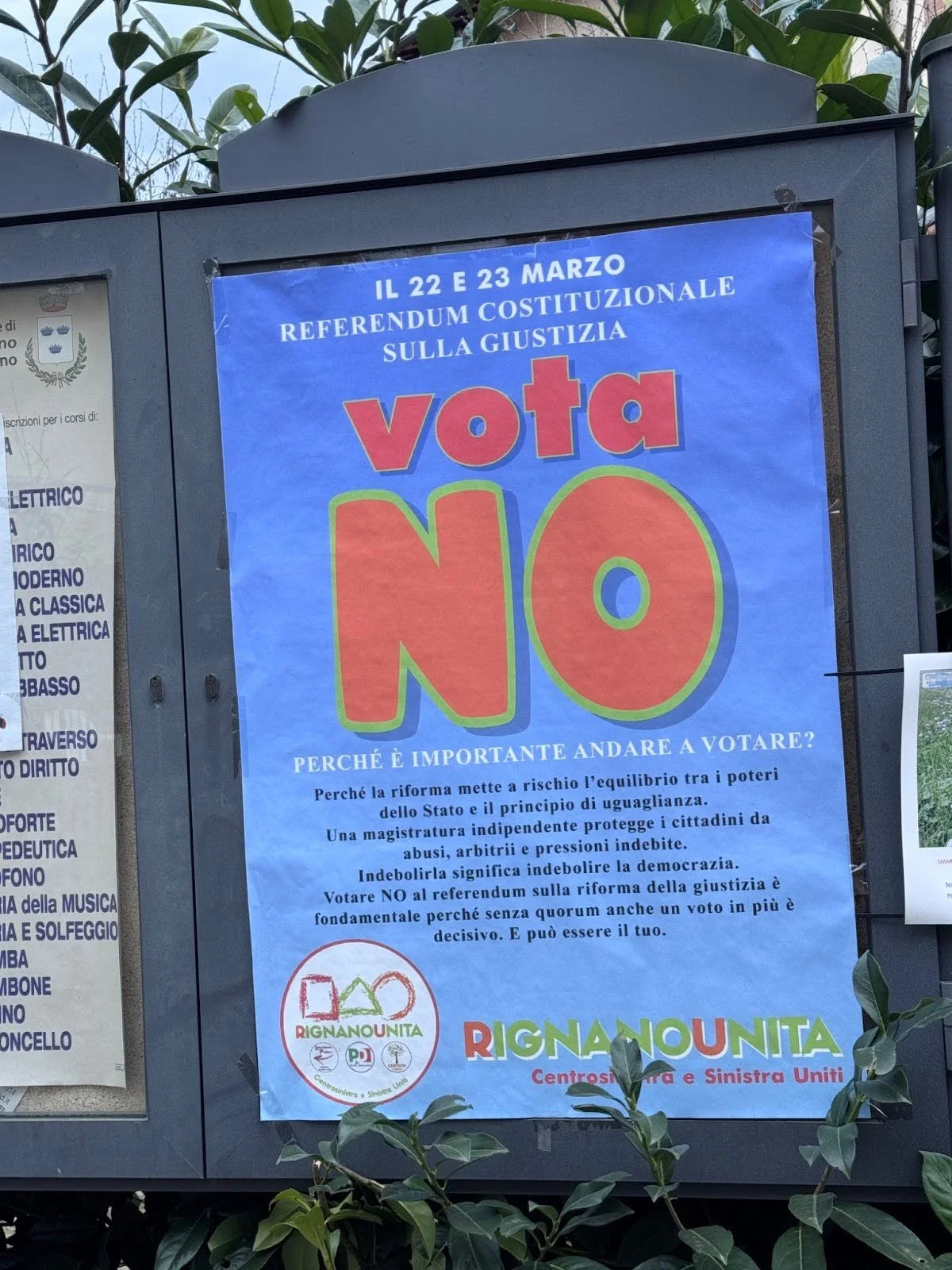
No Kings rally, former prison Palazzo Vecchio, Italy, 28 March 2026 Referendum on right-wing Giorgia Meloni. Photos by author.I listen to a conversation about distant violence between the Powers and the Citizens. Within days, No Kings rallies and a vote in Italy unfolded—each in a state of refusal. I stood among those gathered here in Florence for the No Kings rallies in the Piazza della Signoria, at the Palazzo Vecchio—one citizen among some eight million citizens across the United States and other countries. In Italy, over 60 percent of voters—a strikingly high turnout—refused a constitutional revision. The proposed change would remove judicial independence from political actors in power.
Everyone knows that others are dying from another nation’s bombs. Someone, somewhere, is seeing a child crushed by a roof. No matter where we are, savage brutality is visible. People are repulsed.
Soon, I plan to sit at a table in a library, the Biblioteca delle Oblate. It was Florence’s first major hospital, founded between 1285 and 1288. Talk about care throughout time. Photographs of its huge arched windows promise more views of beauty. Beauty. This is why I am here.
I bought the ticket. I came anyway, bones broken. I have no explanation. Governments, laws, and friends ask for reasons. I have none. Off-kilter, I continue. I want this place to sink into me, into every hum that rises before thought happens. Suddenly, I’m singing an Italian song.
I booked a room in the Hotel Stupido. The painted ceilings astound. I assumed the word meant witless, characteristic of my typical follies. I look up the etymology of the Italian word stupido. Well, now, maybe not only. The word derives from the Latin adjective stupidus, meaning “struck senseless, amazed, or confounded.” I read this experience in two ways. Since 2016, I’ve been slammed by our American situation—I am confounded by its senselessness. I am beyond ready for Yin to balance the Yang of being a citizen alive to the nowness of our now. I need to be struck by the wonder of beauty. Pulse and breath. The ah of it.
Last night, once again, I turned to Ada Palmer speaking about ambitions realized, or not, through politics, money, and architecture throughout the Renaissance.
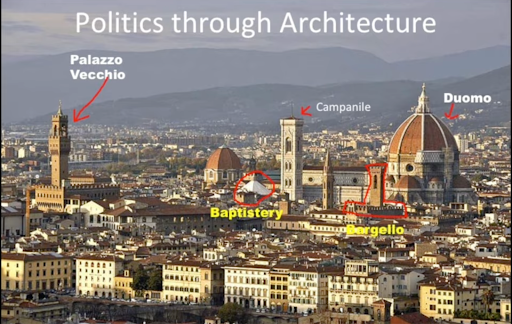
Screenshot from Ada Palmer, Italian Renaissance Architecture.The cycles Palmer describes—wealth accumulation, governance strain, war, plague—are present again. Different costumes. The same pressures. We are players on a recurring stage. Even so, the script has a habit of slipping its lines. In the Biblioteca delle Oblate, I am surrounded by books packing words instead of guns. Inside every book is a persistent argument for different arrangements. Like new arrangements seen on the street—a string forming an original geometry as it holds green onions. In their company, I might open up to what wants to be said.
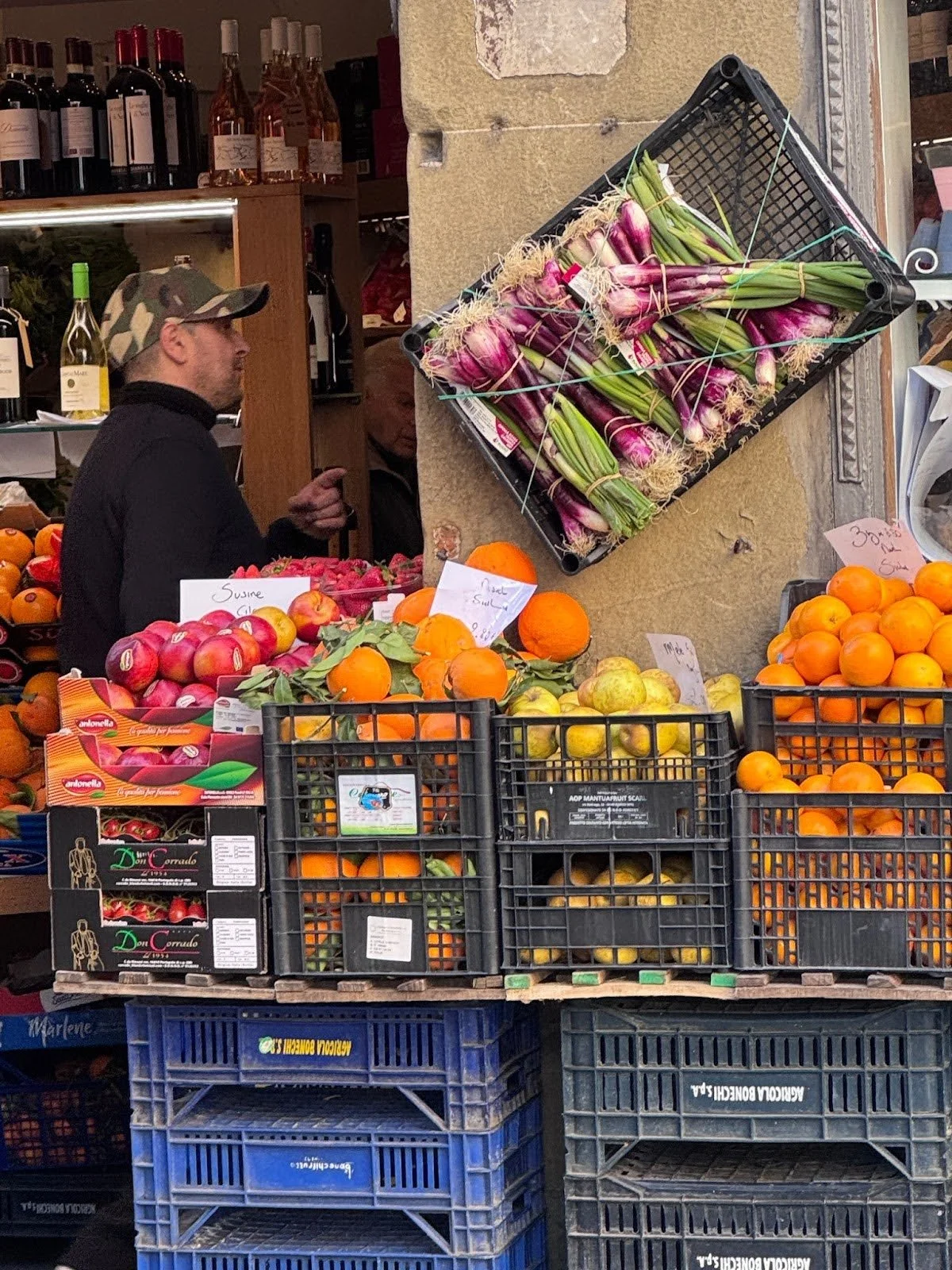
Photo by author.I want a place of gorgeousness to rest from ceaseless noticing imposed by the other side of stupidus: stupid, witless, angry blasts of power. That kind of stupid imposes trauma held in the body from which the body cannot escape.
Beauty nourishes. I know this by my quickening heart.
In the first museum I entered in Florence, I saw a collection of anatomical wax figures. Ligaments, muscles, veins, organs—limbs, feet, hands, the head—revealed the structure of life as it was understood through 18th-century Enlightenment science. Why not begin my time in Florence by looking at how people comprehended themselves then? Why not be present to the curiosity of those who sought understanding beyond the controls of the church and state that governed their lives? As I looked at human forms transcribed in wax, I remembered accounts of a mother who lived through the Black Death—who wrote letters about the price of flax and fretted about finding wives for her sons.
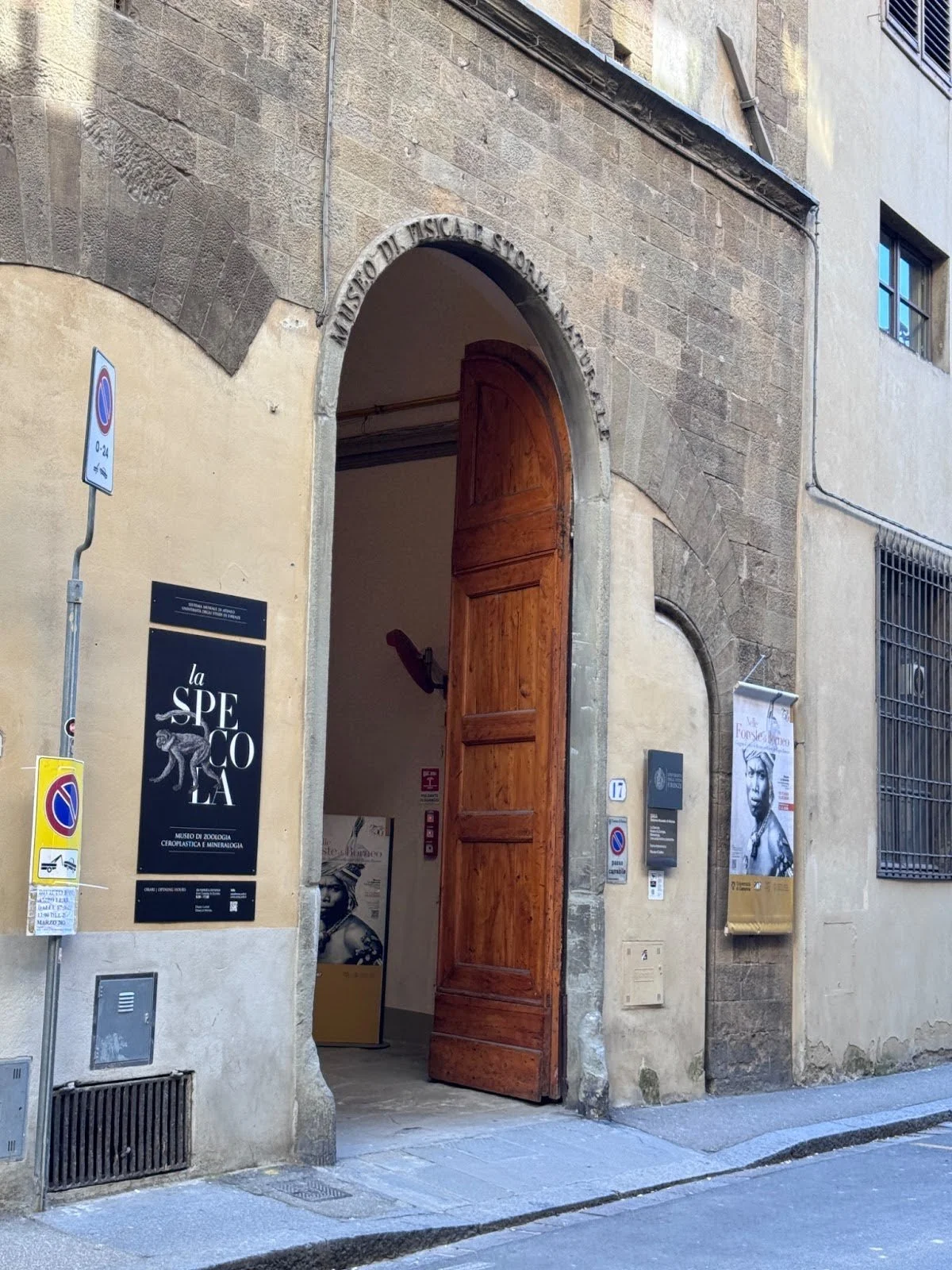
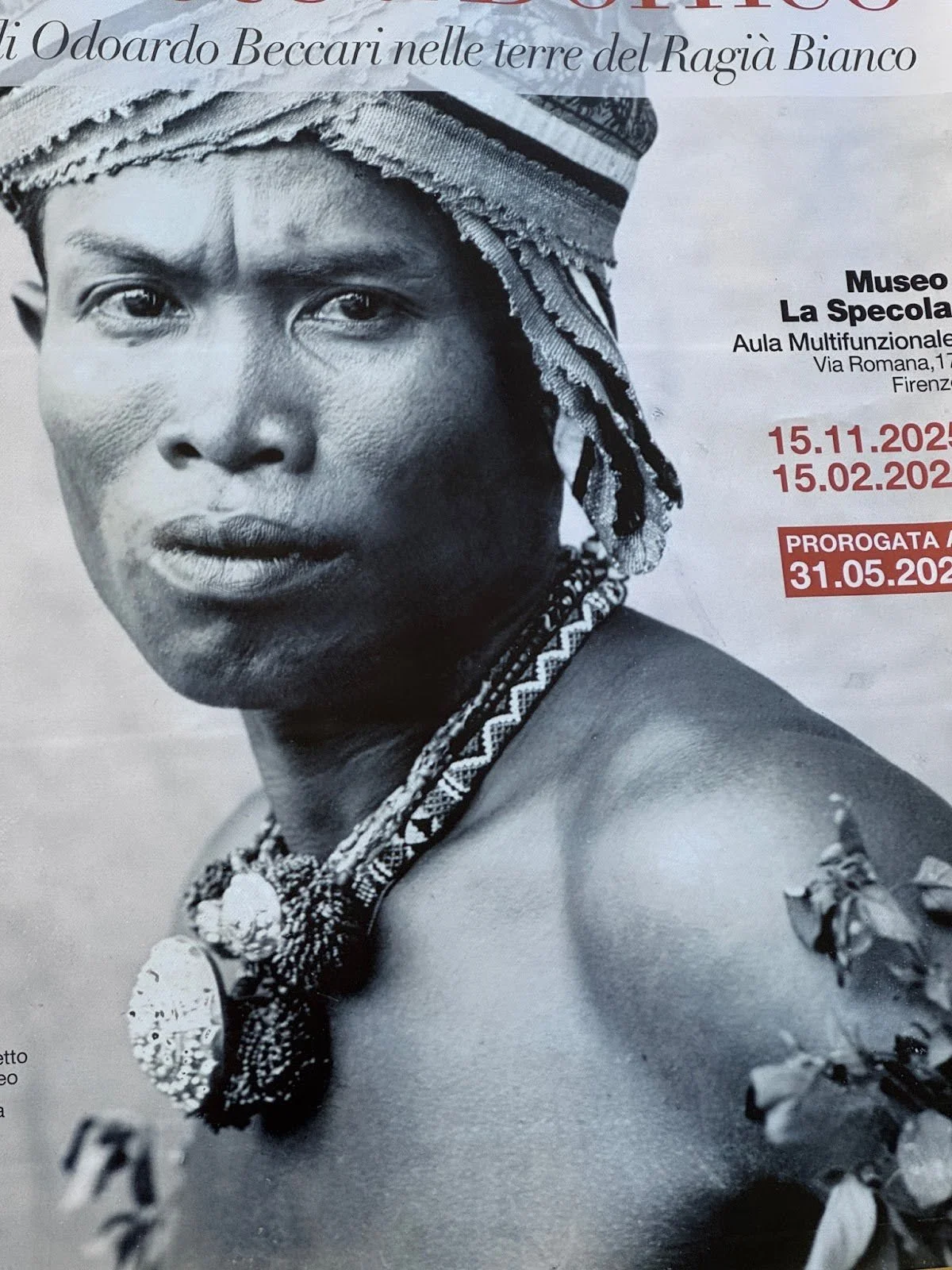
La Specola entrance, Florence, Italy 2026. Photos by author.The clarity of close observation and skill in the wax figures shows a form of power that sustains; attention open to the unforeseen.
Walking away from La Specola, I look up. Two women lean outward from a building, one carrying a lantern. They do not step out. They hold the threshold open.
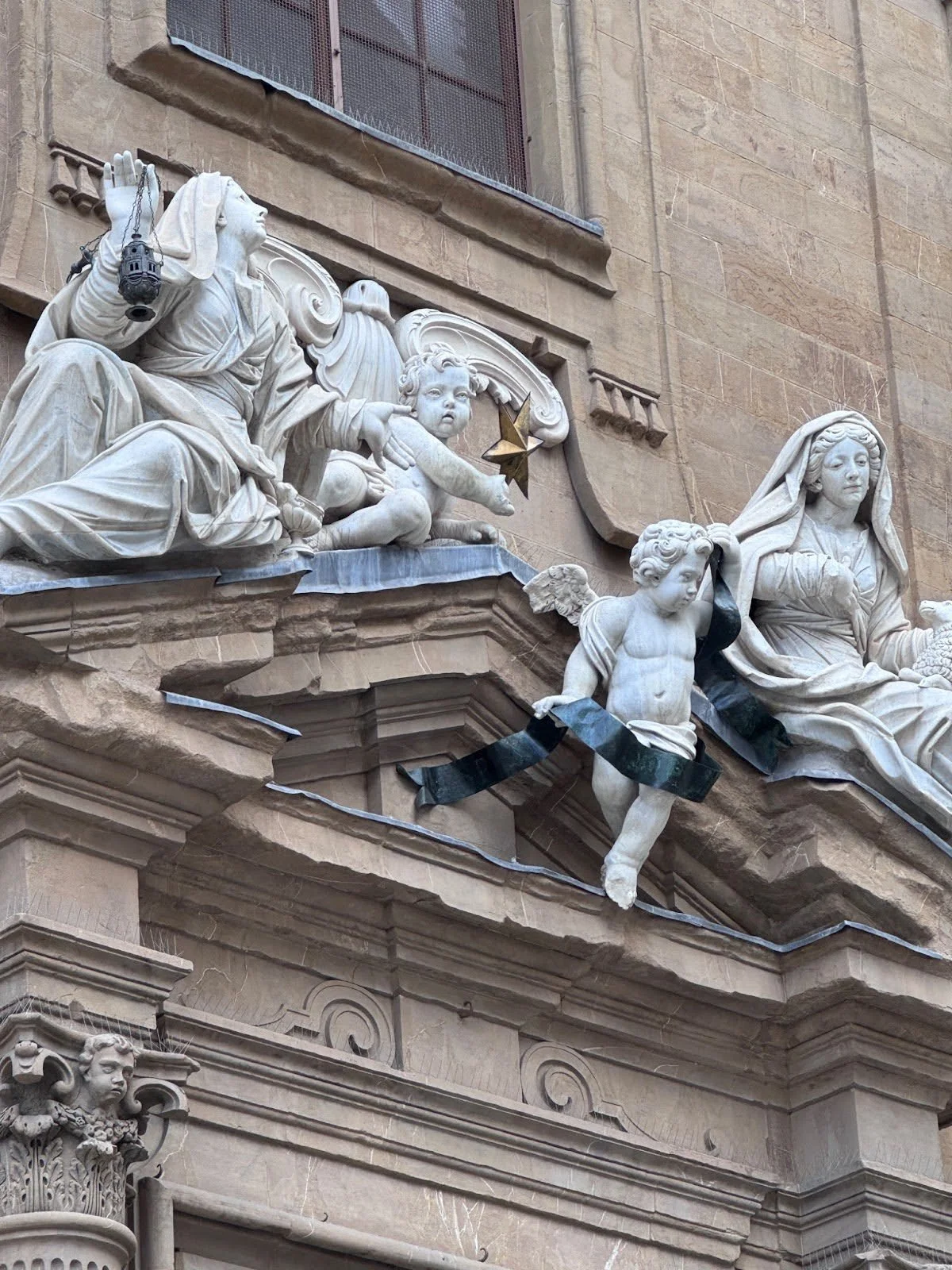
Photo by Author.NOTES:
Jane Jacobs, The Death and Life of Great American Cities (1961).
Ada Palmer, “Italian Renaissance Architecture,” lecture (YouTube), consulted March 2026—on politics through architecture.
“No Kings” protests, United States, March 2026 (reported participation of approximately eight million).
Italian constitutional referendum, 2026 (majority vote rejecting judicial consolidation).
And I note the seventy-three letters of Alessandra Macinghi Strozzi—held in the Archivio di Stato di Firenze—where a life is assembled in ink: money, marriages, sons sent outward, the city pressing in (Selected Letters of Alessandra Strozzi).